
Georgia Building Permits: Owner-Builder Rules and Costs


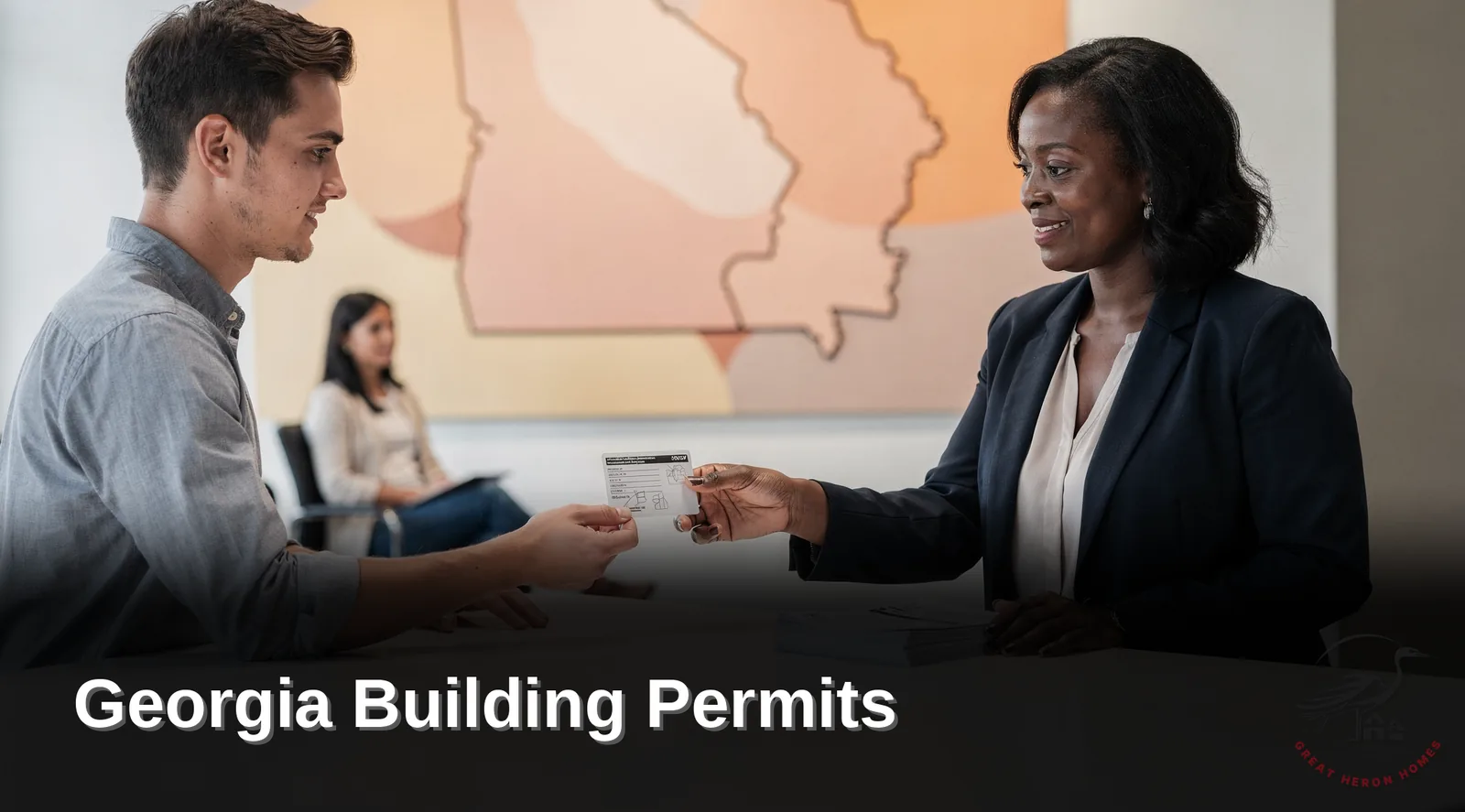
Georgia owner-builders can obtain permits directly through their county building department, bypassing contractor licensing requirements
Permit issuance in Georgia occurs at the city or county level—Atlanta's Office of Buildings is one example—since the state has no single statewide permitting office. Georgia law includes a clear owner-builder exemption allowing residents to act as their own contractor. Local jurisdictions still set specific fees, inspections, and code requirements.
Georgia building permits fall under a local issuing model, with each city or county—like Atlanta's Office of Buildings—setting its own requirements, costs, and timelines within statewide minimum codes. State law includes a clear owner-builder exemption, allowing property owners to act as their own contractor. Great Heron Homes guides Forsyth County and Lake Lanier area clients through this process as licensed general contractor.
What Will This Georgia Permit Guide Cover?
Georgia building permits grant legal authorization before construction, renovation, or demolition begins on most structures across the state. Skipping that authorization creates real risk: stalled closings, forced teardowns, and costly retrofits for homeowners who discover violations after the fact. This guide maps the process so Georgia property owners, from the North Georgia mountains to the Lake Lanier region, can move forward with confidence.
Coverage spans the full permitting journey, structured around three core areas:
- How to get a building permit in Georgia — the application sequence, required documents, and typical review order.
- Georgia building codes and how the statewide minimum code interacts with local amendments county by county.
- Georgia owner builder rules, including the exemption that allows a property owner to act as general contractor on a personal residence.
Why does permitting vary so much by county?
Georgia runs a decentralized system. Jurisdictional authority, permit classifications, and inspection stages shift from one county building department to the next, so a process familiar in one part of the state may look different elsewhere. Property owners near Lake Lanier and Forsyth County should confirm local requirements before assuming statewide uniformity.
Is Georgia a good state for owner-builders?
Yes. Georgia combines a statewide minimum building code with a clear owner-builder exemption written into state law, backed by a growing economy that supports custom home construction. That combination gives owner-builders a workable path, provided they understand Georgia residential zoning requirements, unpermitted structure rules Georgia enforces at the county level, and the true Georgia construction permit cost before breaking ground. Great Heron Homes serves clients throughout Georgia who need that expertise applied to real projects.

Who Issues Building Permits in Georgia?
No single state office issues building permits in Georgia. Authority rests with individual cities and counties, each operating its own building department under a local issuing model. That structure means a homeowner in one county follows a different application path than a neighbor thirty miles away. For prospective custom home builders and owner-builders across the state, this fragmented system makes local research a first step, not an afterthought.
Great Heron Homes serves clients throughout Georgia, including Forsyth County and the Lake Lanier region, and coordinates with the correct local authority on every project. Jurisdictional rules vary widely, so identifying the governing department early prevents delays before ground ever breaks.
Which departments handle permits in specific Georgia jurisdictions?
Requirements shift dramatically depending on location. In Atlanta, the Office of Buildings issues Georgia building permits and manages inspections citywide. Lawrenceville routes applications through its Planning & Development Department, which processes them via an online portal. Cherokee County takes a stricter approach, issuing permits exclusively to licensed contractors or owner-builders who have received prior approval.
Jurisdiction
Issuing Authority
Process Notes
Atlanta
Office of Buildings
Handles permits and inspections directly
Lawrenceville
Planning & Development Department
Applications submitted through online portal
Cherokee County
County building department
Restricted to licensed contractors or approved owner-builders
Does every Georgia county follow the same permitting rules?
No. Each city or county building department sets its own procedures within its jurisdiction. Some departments accept digital submissions while others require in-person applications. Eligibility standards for owner-builders differ from one county to the next. Confirming the local requirements before applying saves owners from costly resubmissions and inspection setbacks later in construction.
Can You Legally Build Your Own Home?
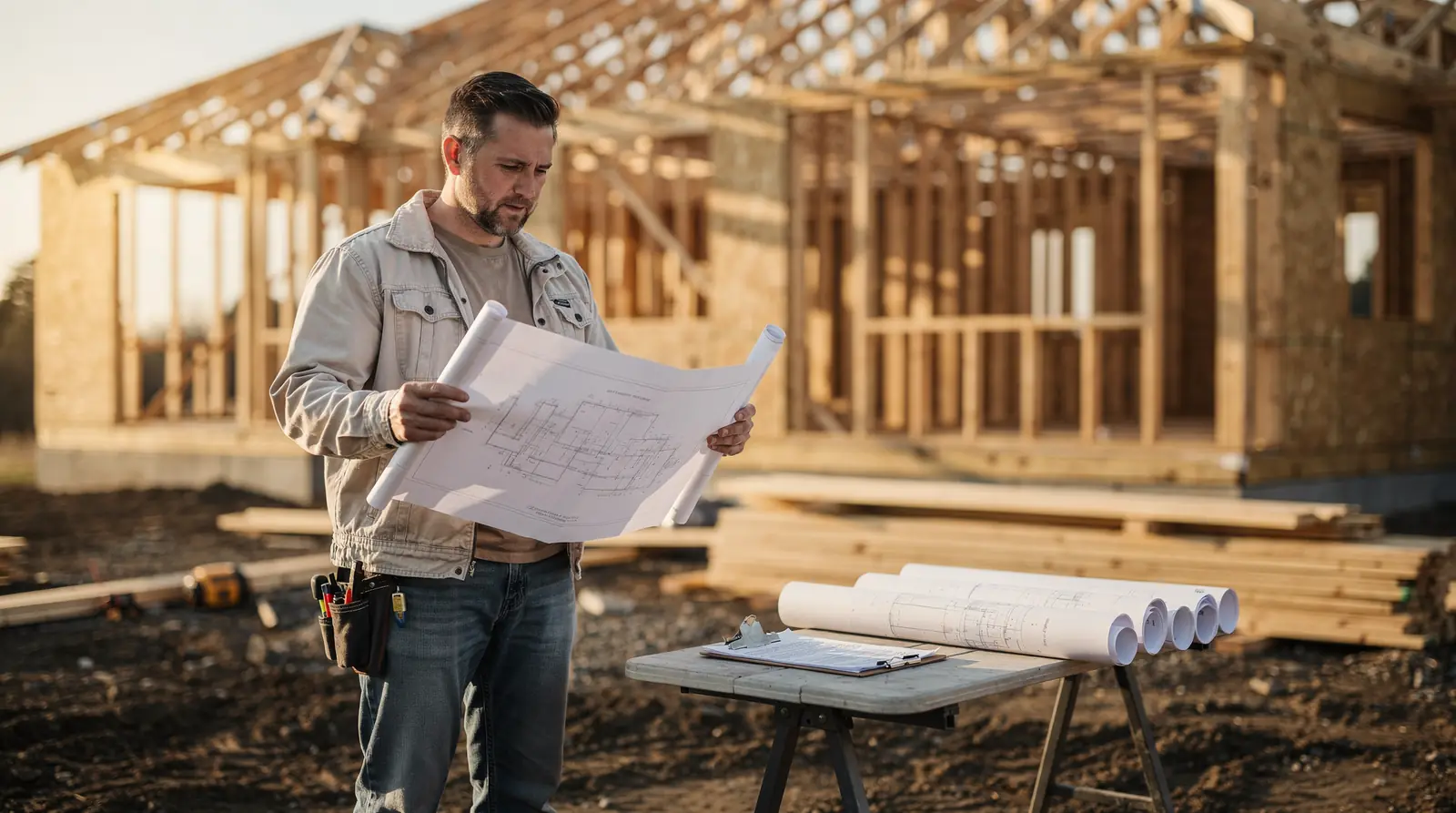
Yes. Georgia law permits a property owner to serve as their own general contractor, sidestepping the standard licensing requirement, provided specific ownership and occupancy conditions are met. This path forms the foundation of Georgia owner builder rules, a framework that treats self-directed construction as a legitimate alternative to hiring a licensed contractor. For Forsyth County residents and Lake Lanier-area buyers weighing a hands-on approach, the exemption offers real flexibility. But it comes with strings attached.
The owner must hold title to the property, intend the home for personal use rather than resale to the general public, and refrain from offering contracting services to others under this exemption. Those conditions matter. Georgia law does not extend this privilege to speculative builders or anyone using the exemption as a workaround to avoid licensing standards.
What Happens If an Owner-Builder Sells the Home Quickly?
Timing carries legal weight. Under O.C.G.A. §43-41-17(h), selling, transferring, or renting a self-built home within 24 months of receiving the certificate of occupancy triggers a legal presumption. The state assumes the home was built for sale or lease from the outset, which undermines the owner-builder exemption entirely and exposes the owner to licensing violations.
Is Georgia a Practical State for Self-Building?
Largely, yes. Georgia combines a statewide minimum building code with a clearly defined owner-builder exemption, creating a workable environment for self-builders. A growing economy across the state — from North Georgia's mountain communities to the Lake Lanier corridor. Adds further incentive for property owners considering this route.
Owner-builders should weigh three realities before breaking ground:
- Ownership verification — the property must be titled in the builder's name before permitting begins.
- Occupancy intent — the home must be built for personal use, not commercial resale.
- Timing discipline — waiting beyond the 24-month threshold before selling protects the exemption's legal standing.
Great Heron Homes serves Georgia buyers who prefer expert-managed construction over the owner-builder path, delivering the same craftsmanship without the compliance risk.
How Do You Get a Building Permit?
Securing approval starts with a formal application filed at the correct county or city building department. Georgia building permits protect property owners because unpermitted work can trigger fines, stalled resales, or forced demolition down the road. Each jurisdiction sets its own submission process. Property owners in Forsyth County, Chatham County, or Troup County should confirm local rules before breaking ground.
For most property owners, the process follows a consistent sequence:
- Confirm whether the project needs a permit. A building permit is required before most major structural changes to a property can begin, including additions, alterations, and new construction.
- Identify the correct department. Some jurisdictions, such as Troup County, route applications through a combined Building, Planning, and Zoning Department that handles everything from swimming pools to accessory structures.
- Gather required documents. Plans, site surveys, and compliance certificates typically accompany the application, varying by scope of work.
- Submit through the accepted channel. Applications cannot be accepted by fax or email in some jurisdictions, meaning property owners must deliver paperwork in person or through an approved online portal.
- Track review and inspection stages. Departments verify plans against local codes before issuing approval, then schedule inspections at defined construction milestones.
Where Do Property Owners Submit Applications in Person?
County offices set their own hours for walk-in submissions. In Chatham County, for example, applications must be submitted in person Monday through Friday during set office hours, rather than dropped off anytime. Property owners planning a submission trip should call ahead and confirm the current schedule, since office hours shift periodically.
Can Applications Be Submitted Online Instead?
Some counties offer digital portals as an alternative to in-person filing, though acceptance varies by jurisdiction. Fax and email submissions remain off the table in many departments. Property owners without portal access should plan for an in-person visit. Great Heron Homes, serving clients throughout Georgia from its Cumming base, manages this filing process directly for custom-build clients, removing the guesswork from county-specific procedures.
Because requirements differ so widely across Georgia's counties, property owners benefit from a builder who already understands each department's expectations, saving weeks of back-and-forth during the design phase.
What Do Georgia Building Codes Require?
Georgia building codes set the minimum safety, structural, and fire-resistance standards every residential project must meet before a family moves in. Permits serve as the enforcement tool behind this framework, giving county and city officials a way to confirm that construction meets code at each stage. Skipping this oversight risks a home that fails inspection, delays occupancy, or requires costly rework down the line.
Fire safety receives particular attention within Georgia's code structure. A dedicated Safety Fire Engineering team reviews, amends, and approves construction plans across the state to confirm compliance with adopted fire codes and standards. Custom home buyers in Forsyth County and the Lake Lanier region benefit from this layer of review. It protects long-term structural integrity as much as it protects against fire risk.
Are Georgia's fire codes changing?
Yes. Updated statewide minimum fire safety standards, known as Rule 120-3-3, took effect by May 27, 2025. Property owners planning new construction or major renovations should confirm current plans reflect these revised standards before submitting for approval.
Who else regulates safety on a Georgia build?
The State Fire Marshal operates separately from local plan review, issuing licenses and permits tied to hazardous materials and manufactured housing. This distinction matters for custom home clients, since a project may touch multiple regulatory bodies depending on scope.
In practice, Georgia code compliance involves several checkpoints:
- Local plan review confirming structural and safety standards
- Fire code review by the Safety Fire Engineering team
- Compliance with the 2025 Rule 120-3-3 updates
- State Fire Marshal oversight for hazardous materials or manufactured housing, where applicable
Great Heron Homes manages these layers directly for clients building in Georgia, translating regulatory complexity into a smooth, transparent path toward move-in day.
What Zoning Rules Apply Before Breaking Ground?
Local zoning departments govern land use before any foundation gets poured. In jurisdictions such as Atlanta, the Department of City Planning administers both Georgia residential zoning requirements and building code compliance under one roof, giving property owners a single point of contact for approvals. That structure varies by county, but the underlying principle holds statewide: zoning clears the land use question before construction permitting even begins.
Zoning offices review several factors tied to a specific parcel. These typically include:
- Building height limits for the zoning district
- Overall structure size relative to lot dimensions
- Placement of the home on the lot, including setbacks
- Density allowances for the surrounding area
- Required off-street parking
Property owners planning a custom build in Georgia should confirm these standards early. A design that violates density or setback rules forces costly revisions later.
Does design review affect custom home approval?
Yes, in many jurisdictions a separate design office weighs in before final approval. This office issues guidance rooted in the city's established design values and oversees compliance within historic or landmark districts. A custom home planned near a designated historic corridor faces additional scrutiny beyond standard zoning review. Owners should verify district status before finalizing architectural plans.
Who reviews zoning for a Lake Lanier or Forsyth County property?
County-level planning departments handle these reviews, following the same land-use principles applied in larger jurisdictions like Atlanta. Height, lot placement, density, and parking standards still govern approval. Great Heron Homes coordinates directly with county offices throughout Forsyth County. The Lake Lanier region, guiding clients through zoning verification as part of the custom build process across Georgia.
What Should You Budget for Permit Costs?
Permit fees in Georgia depend entirely on jurisdiction. No single statewide figure exists, since Georgia construction permit cost amounts shift from county to county based on local fee schedules and project scope. Property owners in Forsyth County, along the Lake Lanier shoreline, or anywhere across the state should treat every fee estimate as jurisdiction-specific rather than universal.
Because each city and county operates its own permitting structure, the local variations define both process and timeline, not just the price tag. A homeowner researching how to get a building permit in Georgia in one county may face a completely different fee structure, review sequence, or inspection schedule than a neighbor two counties over. This decentralized model rewards early, direct research with the local building department before finalizing a construction budget.
Does location affect permitting difficulty across Georgia?
Geography plays a role, but not always the way property owners expect. Georgia's diverse regions, stretching from the North Georgia mountains down to the coastal communities, maintain permitting processes described as manageable despite this range of terrain and climate conditions. Builders working near Lake Lanier benefit from the same principle: local review, applied consistently, keeps projects moving.
Why budget time, not just money, for permits?
Timelines matter as much as fees. Understanding the full permit process helps property owners plan realistic budgets that account for review periods, inspections, and potential resubmissions.
Smart budgeting includes:
- Contact the local building department before drafting final plans.
- Confirm applicable Georgia building codes for the specific project type.
- Ask about Georgia residential zoning requirements that may affect lot use.
- Request a written fee schedule rather than relying on estimates.
- Build in contingency time for inspection scheduling delays.
Great Heron Homes guides clients through this jurisdiction-by-jurisdiction reality across Georgia, translating local permitting complexity into a clear, manageable budget from the first planning conversation.
What Happens With Unpermitted Structures in Georgia?
Unpermitted structure rules Georgia authorities enforce vary by county, but the underlying exposure is consistent: structures built without approval carry legal and financial risk for the owner. Cherokee County illustrates the point clearly. Permits there go only to licensed contractors or owner-builders who have been formally approved, which means anyone building outside that approval process operates without protection. Discovery of an unpermitted addition later, during a sale or refinance, can force costly retroactive corrections.
Georgia's permitting structure compounds the problem. Because the state relies on a decentralized, county-administered system, jurisdictional rules differ from one county line to the next, and enforcement of Georgia building permits varies accordingly. What passes without scrutiny in one county may trigger stop-work orders in another. This patchwork demands diligence from anyone purchasing land or building near Lake Lanier, where jurisdictions often overlap.
Can an unpermitted structure be brought into compliance after the fact?
Correction is possible in many Georgia counties, though the path is rarely simple. Owners typically must:
- Contact the local building department to confirm current Georgia building codes apply to the existing structure.
- Submit a compliant application through the accepted channel — in-person or via approved online portals only.
- Schedule required inspections before any occupancy or sale proceeds.
Why do some permit applications get rejected outright?
Rejection often comes down to submission method rather than project scope. Many Georgia jurisdictions will not accept applications sent by fax or email, regardless of how complete the paperwork appears. Missing the accepted format delays legal compliance and extends the window of risk for property owners carrying unpermitted work. Great Heron Homes guides Georgia clients through proper submission channels, avoiding these preventable setbacks.
Leave your number
and we will call you back
for a home
