
Are Custom Homes Worth It? What to Know


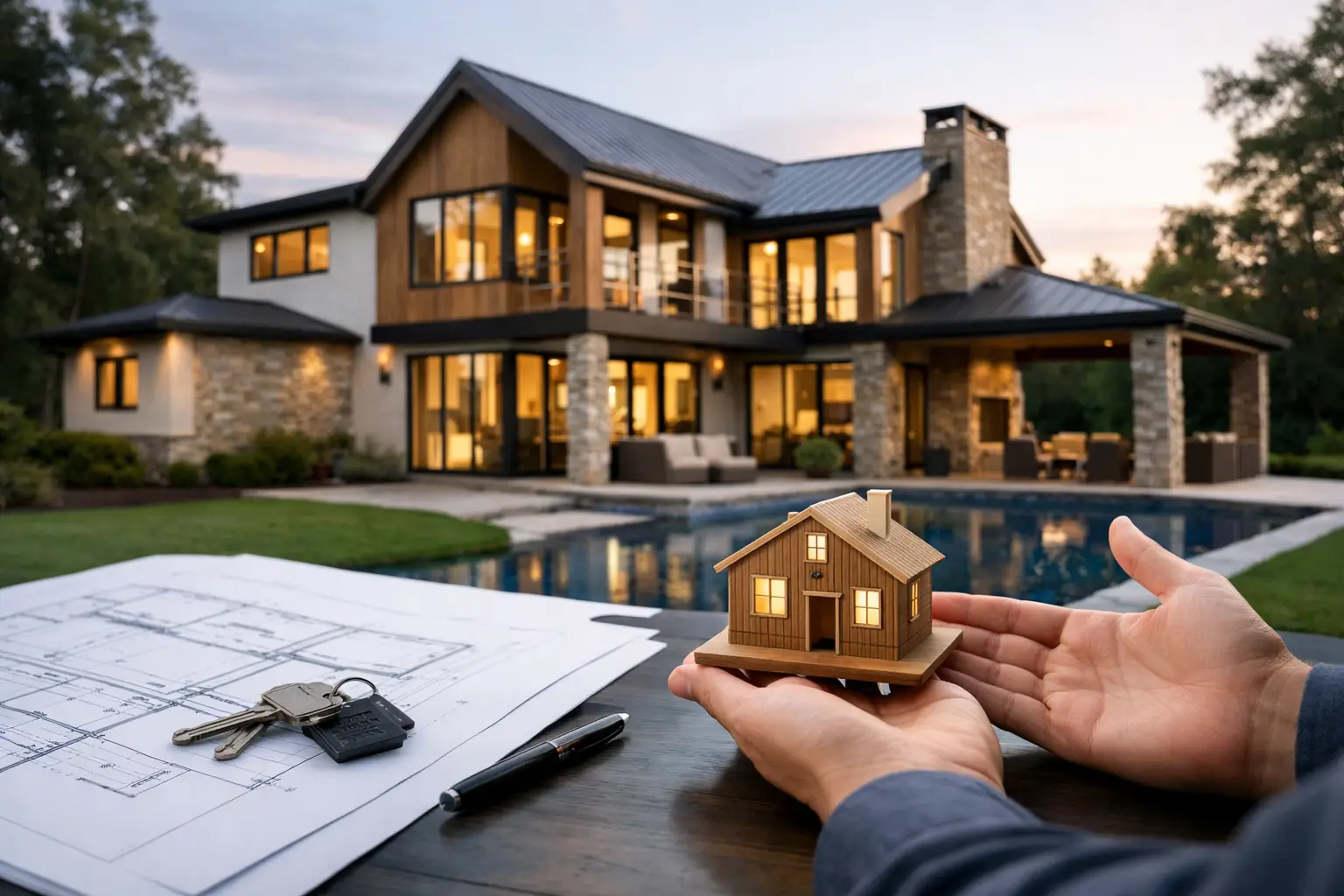
If you have ever walked through a resale home priced well into the luxury range and still thought, this is close but not quite right, you are already asking the real question: are custom homes worth it? For many high-end buyers, the answer is less about square footage and more about whether the home fits the way they actually live, entertain, work, and plan for the future.
The short answer is yes - custom homes can absolutely be worth it. But not for everyone, and not in every situation. The value depends on your timeline, your lot, your expectations, and how much importance you place on design control, build quality, and long-term livability.
Are custom homes worth it for luxury buyers?
In the luxury market, a home is rarely just a place to sleep. It is where daily routines, family life, hosting, privacy, and personal style all come together. That is why custom building often makes sense for buyers who are done compromising.
A well-planned custom home gives you control over the features that matter most. That might mean a main-level primary suite, larger windows to capture wooded or lake views, a true scullery behind the kitchen, a three-car garage with room for storage, or a floor plan that gives teenagers and guests their own space without sacrificing openness in the main living areas.
That level of control is difficult to replicate in an existing home, even with a major renovation. Remodeling can improve finishes, but it cannot always fix ceiling heights, sightlines, lot orientation, awkward room flow, or structural limitations. If your goal is to create a home that feels intentional from the ground up, custom building offers a different category of value.
Where the value of a custom home really comes from
The biggest return is usually not a quick resale gain. It is the ability to align the home with your priorities from day one.
First, there is functional value. A custom home can be designed around how you live now and how you expect to live five or ten years from now. If you work from home, host extended family, want aging-in-place features, or need better separation between public and private spaces, those decisions can be built into the plan instead of forced later.
Second, there is quality control. In a true custom process, materials, construction methods, mechanical systems, and interior finishes are selected with intention. That often results in a better-built home, especially when the builder manages the process closely and communicates clearly about allowances, upgrades, and scope. For buyers in the luxury range, that construction quality matters as much as the design itself.
Third, there is location value. When you build on the right homesite, the home and land work together. Orientation, elevation, privacy, outdoor living, and curb appeal all improve when the design responds to the lot instead of trying to retrofit an existing structure. In markets where premium land is limited, that pairing can be one of the strongest reasons to build.
Finally, there is lifestyle value. This is the part buyers sometimes underestimate. A home that functions beautifully every day has real worth. Better storage, stronger indoor-outdoor flow, more natural light, and a layout that reduces friction all affect how the home feels to live in. That may not fit neatly into a spreadsheet, but it matters.
When custom homes may not be worth it
Custom building is not automatically the right move just because your budget allows it.
If your top priority is speed, a custom home may feel too slow. Design, permitting, selections, and construction all take time. Even with excellent project management, building from scratch requires patience. Buyers who need to move quickly often find that a completed luxury home or a well-chosen spec home is the better fit.
It may also be the wrong choice if you do not want to make decisions. A strong builder can absolutely simplify the process, guide selections, and keep the project organized, but custom building still involves choices. Some buyers love that. Others would rather purchase a finished home where those decisions have already been made well.
Then there is budget flexibility. Custom homes typically come with a premium because they are personalized, site-specific, and not built at production scale. If your financial comfort depends on a very fixed number with little room for site work, finish adjustments, or owner-driven upgrades, a custom build can become stressful rather than exciting.
In other words, the answer to are custom homes worth it changes quickly when the wrong buyer enters the process. The right project needs the right goals, the right lot, and the right team.
The cost question buyers should ask instead
Many buyers frame the decision as custom home versus existing home based only on price per square foot. That is understandable, but it is incomplete.
A better question is this: what are you paying for, and what would it cost to get the same result another way?
An existing home may appear less expensive on paper. But if it needs extensive renovation, structural changes, window reconfiguration, new systems, outdoor living additions, and premium finish upgrades, the price gap can narrow quickly. At that point, you may still be left with a house that was never designed around your preferences in the first place.
By contrast, a custom build allows you to allocate investment where it matters most. You can spend more on the kitchen and primary suite, prioritize architectural details, or simplify lower-priority spaces. That does not make custom cheaper. It makes it more intentional.
For many luxury buyers, value is not about minimizing spend. It is about directing investment toward things that improve the home meaningfully and last.
What makes a custom home worth it in practice
The custom experience is only as good as the process behind it.
A home can look beautiful in renderings and still become frustrating if budgets are unclear, communication is inconsistent, or the builder is not proactive about site challenges and scheduling. That is where many of the horror stories about custom construction begin.
What makes custom worthwhile is a builder-led process that removes unnecessary uncertainty. That includes transparent pricing, thoughtful pre-construction planning, realistic timelines, clear documentation, and active supervision from the first site visit through final inspection.
For buyers in North Atlanta and Forsyth County, local expertise also matters. Land conditions, neighborhood expectations, permitting pathways, architectural preferences, and resale dynamics can vary widely from one area to the next. A builder who understands the local market can help you avoid expensive missteps before the foundation is ever poured.
This is where a concierge-style approach has real value. When the same team helps with homesite evaluation, design coordination, construction oversight, and final delivery, the process becomes more organized and more predictable. That does not eliminate every decision or every variable, but it does reduce the friction that often makes custom building feel overwhelming.
Are custom homes worth it as an investment?
They can be, but the answer depends on how you define investment.
If you mean short-term appreciation alone, custom is not always the clearest path. Overbuilding for the neighborhood, choosing highly personal features with narrow appeal, or selecting a poor lot can all limit resale strength. A custom home should still be designed with market awareness, even when it is highly personalized.
If you mean long-term value, the picture is stronger. A custom home in a desirable area, built with enduring architecture and quality materials, often holds appeal better than a home that reflects dated layouts or broad-market shortcuts. Timeless design, strong craftsmanship, and an excellent site tend to age well.
There is also personal return on investment. If you plan to stay for years, the daily benefit of a home that works beautifully for your lifestyle is substantial. For many families, that is the real payoff. They are not building for a quick flip. They are building to live better.
So, are custom homes worth it?
If you want the lowest-friction path to a new address, probably not. If you want a home tailored to your lifestyle, your standards, and your long-term plans, often yes.
The strongest custom projects usually happen when buyers are clear about what they value. They know they care about architecture, materials, floor plan flow, lot selection, and construction quality. They want transparency, not guesswork. They are willing to invest time upfront to avoid years of compromise later.
That is why custom homes tend to be most worth it for buyers who see their home as both a lifestyle decision and a lasting asset. With the right builder and a disciplined process, custom building can feel less like a gamble and more like a smart, highly personal way to elevate your living.
If you are weighing the decision, the goal is not to prove that custom is always better. It is to decide whether building from the ground up solves the right problems for you.
Leave your number
and we will call you back
for a home
