
How to Select Luxury Interior Finishes


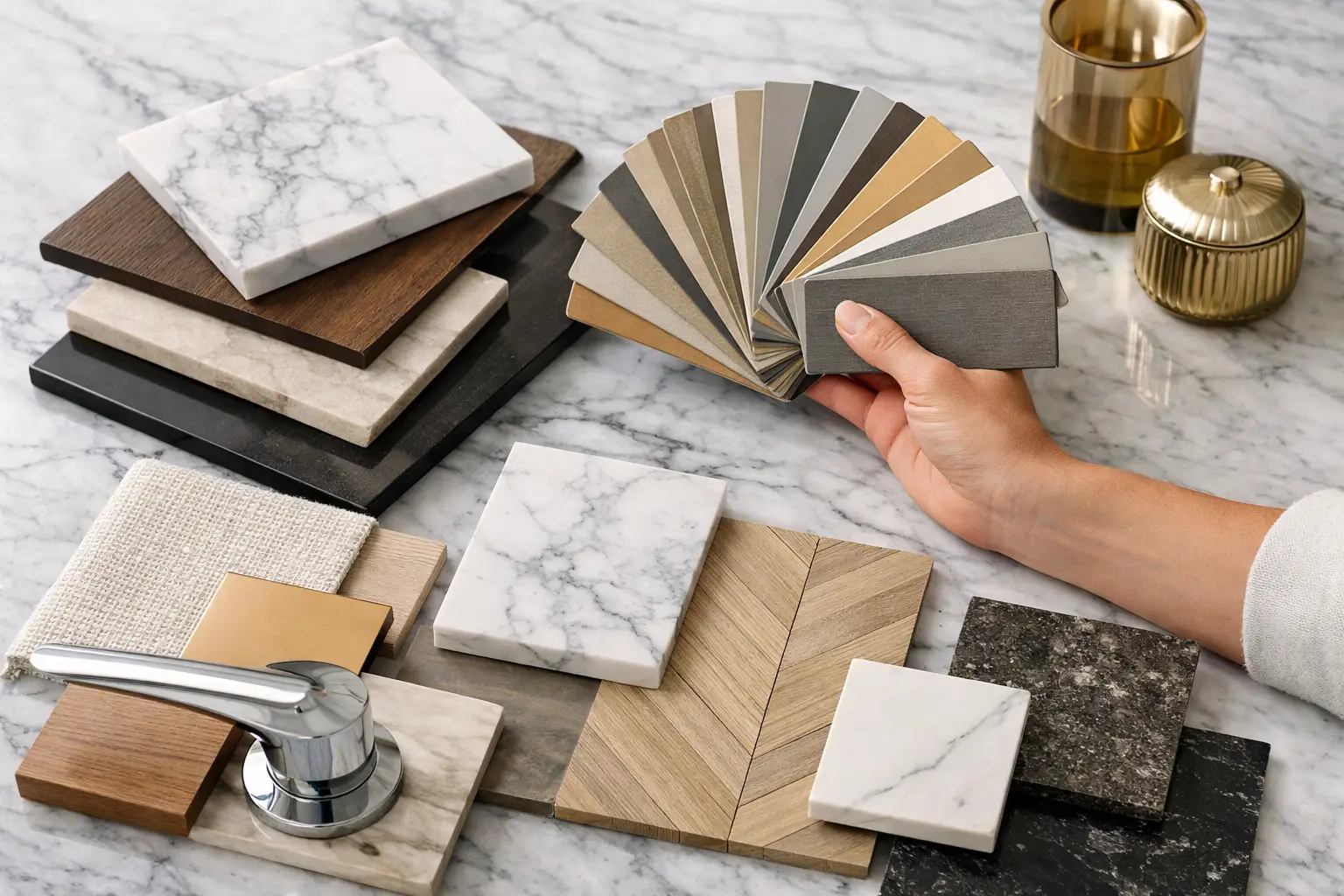
A luxury home can lose its impact quickly if the finishes feel disconnected. You might have strong architecture, generous natural light, and a thoughtful floor plan, but if the stone, flooring, cabinetry, tile, and hardware are chosen in isolation, the result can feel expensive without feeling refined. That is why understanding how to select luxury interior finishes matters so much. The right choices create consistency, support daily living, and protect the long-term value of the home.
For most custom home clients, the challenge is not finding beautiful materials. The challenge is narrowing excellent options into a finish package that feels intentional. Luxury is not about using the most expensive selection in every category. It is about proportion, restraint, performance, and a clear point of view.
How to select luxury interior finishes starts with the architecture
Interior finishes should follow the home’s architectural language, not compete with it. A modern lakefront home may call for cleaner slab profiles, quieter grain patterns, larger-format tile, and metals with a sharper edge. A craftsman-inspired residence often benefits from warmer woods, more texture, detailed millwork, and finishes that highlight depth rather than high gloss.
When homeowners skip this step, they often end up mixing design signals. For example, ornate marble with dramatic movement may feel out of place beside very minimal cabinetry and streamlined windows. Likewise, an ultra-contemporary floor tile can fight against traditional trim profiles and more classic door styles.
The easiest way to stay aligned is to define the home’s visual direction before selecting materials. Decide whether the overall feeling is modern, transitional, classic, or craftsman-influenced. Then build each finish decision around that framework. This keeps the house feeling composed from room to room.
Start with the fixed, foundational finishes
Not every finish has equal visual weight. Flooring, cabinetry, countertops, wall tile, and plumbing fixtures set the tone far more than paint, decorative lighting, or styling. That means the selection process should begin with the most permanent materials.
Flooring is usually one of the best starting points because it flows through large portions of the home and influences everything around it. Wide-plank hardwood in a soft matte finish creates a very different mood than a darker stained floor with stronger variation. Neither is automatically better. It depends on the architecture, the amount of natural light, and how formal or relaxed you want the house to feel.
Cabinetry comes next because it occupies a large visual footprint, especially in kitchens, sculleries, baths, and built-ins. Door style, wood species, paint color, sheen, and hardware all matter. In luxury homes, cabinetry should look custom to the room rather than selected from a catalog and repeated without thought.
Countertops and tile should support those anchor materials. A common mistake is choosing every surface to be the star. If the kitchen island features bold veining, the backsplash may need to be quieter. If a powder bath is the place for drama, adjacent rooms can stay more restrained. Luxury often reads more clearly when there is one focal point at a time.
Build a palette, not a collection of individual favorites
Many finish issues happen because homeowners approve materials one by one. Each selection may be attractive on its own, yet the full package feels busy, flat, or inconsistent. A better approach is to create a complete palette before finalizing orders.
That palette should include wood tone, stone tone, metal finish, paint direction, and tile texture. You do not need every room to match, but the materials should relate. Think of the home as a connected experience rather than a series of standalone design moments.
Contrast is still important. If everything is the same color and texture, luxury can start to look bland. The goal is layered variation. You may pair a warm white wall color with medium-tone oak, brushed brass accents, and a natural stone that introduces soft movement. Or you may use deeper cabinetry, pale flooring, and matte black details to create a more tailored look. The point is cohesion.
Sampling is critical here. Large-format samples, full cabinet door samples, and actual slab views give a much more accurate read than small chips. Under natural daylight and evening lighting, a finish can shift more than expected.
Performance matters as much as appearance
One of the most practical answers to how to select luxury interior finishes is to ask how each material will live over time. A beautiful finish that stains easily, scratches too quickly, or requires constant maintenance may not feel luxurious six months after move-in.
This is especially true in kitchens, primary baths, mudrooms, and main living areas. Natural stone can be stunning, but some varieties etch or stain more readily than homeowners expect. Certain polished surfaces show fingerprints and water spots faster. Some hardwoods dent more easily in high-traffic homes with children or pets.
That does not mean high-performance materials are always the right answer. It means trade-offs should be understood before decisions are made. If you love the character of a softer natural material, it may still be worth choosing. You simply want that choice to be informed, not surprising later.
A strong builder or design team will help weigh these questions early. In many cases, the best finish package combines beauty-forward materials in focal areas with more durable selections where wear is greatest.
Pay attention to finish transitions
Luxury is often judged in the details between materials, not just the materials themselves. The transition from hardwood to tile, the edge profile on a countertop, the reveal around cabinetry, and the way metals are repeated throughout the home all influence whether the final result feels elevated.
If one room uses warm brass hardware, another room uses polished chrome, and a third introduces oil-rubbed bronze without a clear reason, the home can feel unsettled. Mixed metals can work well, but they should be deliberate. Usually, one primary metal and one supporting metal is enough.
Tile layout matters too. A premium tile can still look ordinary if the pattern, grout color, or termination is not carefully planned. Larger rooms often benefit from fewer grout lines and cleaner alignment. Feature walls and shower surrounds need scaled layouts so cuts do not land awkwardly in visible areas.
This is where professional oversight adds real value. Luxury finishes are not just selected. They are coordinated and installed with precision.
Know where to invest and where to simplify
Not every category needs the same budget intensity. Some finishes create more daily impact and stronger resale value than others. Kitchen cabinetry, countertop slabs, primary bath materials, flooring, and statement lighting in key spaces usually deserve focused investment because they shape how the home is experienced every day.
Other areas can be simplified without sacrificing the overall feel. A secondary bath may not need the most exclusive stone if a well-chosen porcelain tile delivers the right look and easier maintenance. A laundry room can feel upscale through thoughtful cabinetry and hardware even if it does not carry the home’s most premium slab selection.
This approach creates balance. It also helps prevent a common luxury-building mistake, which is spreading the budget too evenly across every room. Homes feel more refined when the priorities are clear.
How to select luxury interior finishes without decision fatigue
The finish selection phase can become overwhelming quickly, especially when every showroom offers dozens of strong options. The most effective way to avoid fatigue is to make decisions in the right sequence and with the right filters.
Begin with the architectural style and the overall mood of the home. Then choose the major fixed finishes. After that, refine secondary materials and decorative details. If a selection does not support the larger vision, it should be removed from consideration, even if it is beautiful.
It also helps to choose with the full home in mind rather than chasing trends. Trend-forward details can be useful in smaller, easier-to-update applications like lighting, mirrors, wall coverings, or a feature powder bath. The foundational finishes should have more staying power.
In high-end homes across North Atlanta, buyers consistently respond to interiors that feel current but not overly tied to a short design cycle. That balance tends to age better, live better, and hold value more effectively.
A builder with a clear process can make this stage far more manageable. Great Heron Homes, for example, approaches the custom home journey with that kind of structured guidance, helping clients move from broad inspiration to precise finish decisions with more confidence and less friction.
The best luxury interiors do not come from choosing more. They come from choosing well. When finishes are aligned with the architecture, tailored to your lifestyle, and edited with discipline, the home feels calm, polished, and valuable from the moment you walk in. That is the standard worth aiming for.
Leave your number
and we will call you back
for a home
