
Spec Home vs Custom Home: Which Fits You?


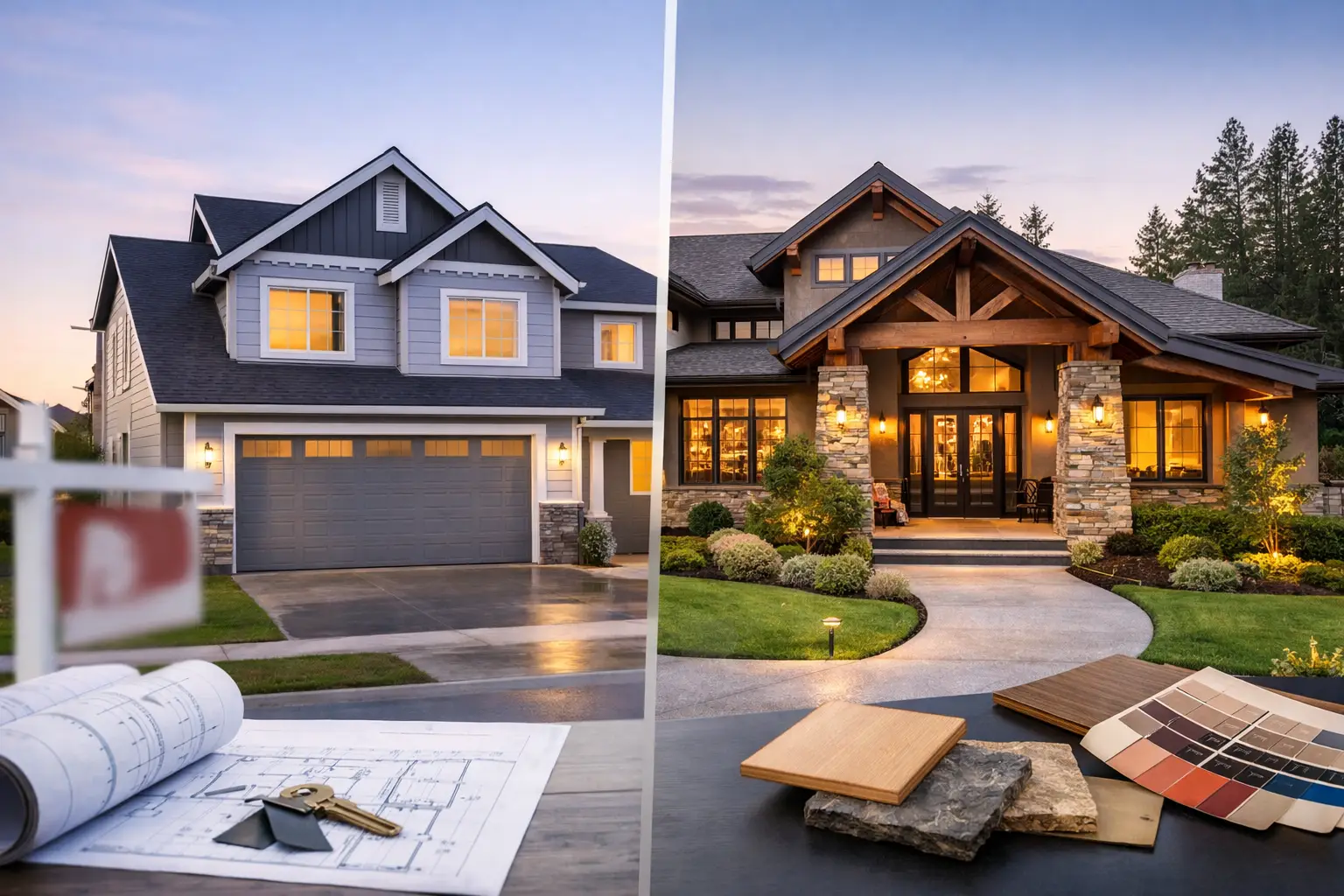
Buying or building a luxury home often starts with one deceptively simple question: spec home vs custom home. On paper, the choice looks straightforward. In practice, it shapes your timeline, your level of involvement, your design freedom, and how confidently you move through one of the largest investments you will make.
For many buyers in the North Atlanta market, the real decision is not whether one option is universally better. It is which path better matches the way you want to live, how quickly you want to move, and how much personalization matters to you.
Spec home vs custom home: the core difference
A spec home is built by a developer or builder before a specific buyer is under contract, or while construction is already underway with most major selections established. It is designed to appeal to a well-defined buyer profile, especially in higher-end markets where architecture, finishes, and location carry strong resale value.
A custom home is built for a specific homeowner from the ground up. The buyer typically has meaningful input on the floor plan, exterior style, interior finishes, lot placement, and many of the details that shape day-to-day living.
That distinction matters because it affects more than aesthetics. It changes the buying experience itself. A spec home offers speed, convenience, and a more predictable path to closing. A custom home offers control, personalization, and the opportunity to create something tailored to your routines, priorities, and long-term plans.
When a spec home makes more sense
A well-executed luxury spec home can be an excellent fit for buyers who want a new home without taking on the full complexity of a custom build. If your schedule is demanding, if you are relocating, or if you simply prefer a more turnkey experience, a spec home often delivers the right balance of quality and efficiency.
The biggest advantage is timing. With a spec home, much of the work has already been completed or carefully planned. That can shorten the path to move-in significantly. Instead of spending months on land acquisition, architectural planning, allowances, and design meetings, you are evaluating a tangible product with a known layout, known finishes, and a clearer completion window.
There is also a degree of financial clarity that many buyers appreciate. Because the home has already been designed and priced around a specific scope, there are usually fewer moving parts than in a fully custom project. That does not mean every cost is fixed in every situation, but it often means fewer open-ended decisions that can affect budget over time.
A luxury spec home can also benefit from disciplined design. Experienced builders understand what performs well in the market. They know how to balance striking architecture with practical livability, and they often choose finishes that feel elevated without becoming overly niche. For some buyers, that is a real advantage. You get a professionally curated home without needing to make hundreds of individual decisions.
Where custom homes stand apart
A custom home becomes the stronger option when your priorities are highly specific. Maybe you want a primary suite arranged for aging in place, a scullery off the kitchen, a dedicated fitness studio, a three-car garage with room for a golf simulator, or a floor plan designed around lake views or a sloped lot. Those are not preferences that always fit neatly into a predesigned inventory home.
Custom building gives you the ability to shape the home around your life rather than adapt your life to the home. That level of alignment can be especially valuable in the luxury market, where buyers are often thinking beyond immediate convenience. They are considering long-term comfort, entertaining needs, family dynamics, work-from-home demands, and future resale.
The design flexibility is the obvious draw, but the site itself is just as important. In a custom project, the lot, orientation, elevation, outdoor living areas, and overall placement can work together intentionally. That is often where a home begins to feel truly distinctive.
There is also the matter of emotional value. For many homeowners, building custom is not just a transaction. It is the chance to create a residence that reflects their taste, priorities, and standards at a much deeper level than a move-in-ready purchase typically allows.
The trade-off is usually time and involvement
This is where the decision becomes more personal.
If you choose a custom home, you are buying into a process, not just an end result. That process can be rewarding, but it requires patience, decision-making, and trust in the team leading the work. Even with strong project management, there are more variables to manage, from permitting and plan development to material selections and site conditions.
A spec home asks less of your time. A custom home asks more of it, even when the builder handles the heavy lifting.
That does not mean custom building has to feel burdensome. With the right builder, it can feel organized, transparent, and surprisingly manageable. But buyers should go into it with realistic expectations. The freedom to personalize comes with more choices, and more choices naturally mean a longer timeline than purchasing a completed or near-complete home.
Budget is not just about price
Many buyers frame this as a simple cost comparison, but that misses the real issue. In spec home vs custom home decisions, budget is also about where you want your money to go.
A spec home often delivers better efficiency because the builder has already optimized the design, material package, and construction process. That can create strong value, especially when the home includes premium finishes and desirable architectural features without the added expense of one-off customization.
A custom home may carry a higher total investment, but that investment is directed toward your priorities. Instead of paying for a generalized luxury package, you are allocating budget to the features, layout decisions, and finish selections that matter most to you.
For some buyers, that is worth every dollar. For others, it is not. If you are likely to choose elevated upgrades across the board, custom can be the right fit. If you prefer to avoid selection fatigue and want an exceptional home already curated by professionals, a luxury spec home may feel smarter and more efficient.
How lifestyle should guide the choice
The best decision usually becomes clear when you think about your lifestyle first and the construction model second.
If you need to move within a defined window, want certainty around what you are buying, and prefer a polished turnkey experience, a spec home often fits well. It allows you to walk through the property, understand the space immediately, and make a decision with fewer unknowns.
If your next home needs to solve very specific lifestyle needs, or if design expression matters enough that compromise will bother you every day, custom is usually the better path. The further your vision moves away from standard expectations, the more valuable a custom process becomes.
This is especially true at the luxury level. Higher-end buyers are not just selecting square footage. They are choosing how the home lives, how it hosts, how it feels, and how well it supports the next chapter of life.
A note on resale and long-term value
Both options can perform well over time, but they do so differently.
A spec home built with broad market appeal may offer strong resale advantages because its design choices are intentionally balanced for a wide range of future buyers. Open layouts, premium kitchens, generous outdoor spaces, and timeless finishes tend to hold value well when executed properly.
A custom home can also be a strong investment, particularly when it is built in the right location and designed with discipline. The caution is overpersonalization. A house tailored exactly to one owner's preferences can become harder to resell if those choices are too narrow or highly stylized.
That is why experienced builders matter so much. The best teams can help homeowners personalize intelligently, creating a home that feels distinctive without undermining future market appeal. That balance is especially important in luxury communities across Forsyth County and the Lake Lanier area, where buyers often care equally about lifestyle and long-term property value.
What to ask before you decide
Before choosing either path, ask yourself a few honest questions. How quickly do you want to move? How involved do you want to be? Are there must-have design elements that you cannot find in current inventory? Do you want the homebuilding process to be highly personalized, or do you want it to be highly efficient?
You should also consider your tolerance for decision-making. Some buyers enjoy reviewing plans, refining finishes, and participating in design discussions. Others would rather trust a proven vision and step into a finished home with confidence.
Neither preference is better. It is simply a matter of fit.
For buyers working at the luxury level, the ideal outcome is not choosing the more impressive option. It is choosing the option that delivers the right combination of quality, ease, personalization, and investment value. Builders that offer both custom construction and thoughtfully developed move-in-ready homes are often in the best position to guide that decision clearly, because they understand the strengths of each model from the inside.
The right home should feel aligned long before move-in day. If the process matches your priorities as well as the finished product does, you are usually on the right path.
Leave your number
and we will call you back
for a home
